
Forged Wheels: What Makes Them Different & How to Choose
Forged Wheels: Key Takeaways
Forged wheels deliver measurable performance gains
- High-pressure forging refines the aluminum’s grain structure, resulting in a wheel that is both lighter and structurally stronger than cast alternatives
- Forged wheels are the premium choice best suited for performance and luxury builds
Forged wheels represent a higher standard in both performance and engineering, but what sets them apart isn’t immediately visible.
It’s felt.
By reducing weight at the wheel, every movement becomes more precise, more responsive, and more connected to the road.
Crafted under intense heat and pressure, forged wheels bring together strength, balance, and control in a way traditional wheel options rarely achieve.
In this guide, we will:
- Understand what forged wheels are and how they compare to cast alternatives
- Dive into the science behind how they’re made
- Explore how to choose the right forged wheels for your vehicle
- Discover how ANRKY can help you find the perfect setup
Understanding Forged Wheels
Forged wheels are high-performance components made by applying intense heat and pressure to a solid billet of aluminum, most commonly 6061-T6.
This process refines the metal’s internal grain structure, resulting in a wheel that is stronger and typically lighter than cast alternatives.
The reduced weight helps decrease unsprung mass, which can improve handling, braking responsiveness, and overall driving dynamics.
While these wheels come at a premium price point, often costing thousands per set; they are widely considered a top-tier choice for performance-focused and luxury vehicles.
How Are Forged Wheels Created?
Great design doesn’t happen by chance.
It comes from a deliberate process, one that combines precision, craftsmanship, and attention to detail to transform raw material into something both technically refined and visually striking.
1. From Raw Material to Refined Performance
The creation of a forged wheel is a meticulous, multi-stage process that blends extreme force with precision engineering, transforming a solid block of aluminum into a high-performance component.
2. Billet Preparation and Heating
The process begins with a solid cylindrical billet of aluminum which is heated to temperatures exceeding 500°C. This softens the material, preparing it for shaping without compromising its internal structure.
3. High-Pressure Forging
The heated billet is then placed into a closed-die hydraulic press, often exerting forces of up to 10,000 tons.
Under this immense pressure, the aluminum is compressed into a rough wheel form, aligning its grain structure and creating the foundation for its strength.
4. Precision Shaping (Spinning or Flow Forming)
Once forged, the wheel blank is spun at high speeds while rollers apply controlled pressure to the rim section.
This process refines the wheel’s width and profile, enhancing both strength and weight efficiency.
5. Heat Treatment for Strength
The wheel undergoes controlled heat treatment and quenching, further increasing its hardness, durability, and resistance to fatigue under load.
6. CNC Machining and Design Detailing
Using advanced CNC machining, the forged blank is sculpted into its final form.
Every detail, from spoke geometry to bolt patterns and hub fitment, is cut with precision, ensuring both performance and exact fitment.
7. Surface Finishing and Protection
Finally, each wheel undergoes a detailed inspection before receiving its final finish.
Techniques such as polishing and powder coating refine the surface while adding a durable protective layer that helps resist corrosion, road debris, and environmental wear over time.
Why Forged Wheels Are a Top Choice
Forged wheels have earned their reputation as a top choice by combining advanced engineering with refined design. Here’s what sets them apart:
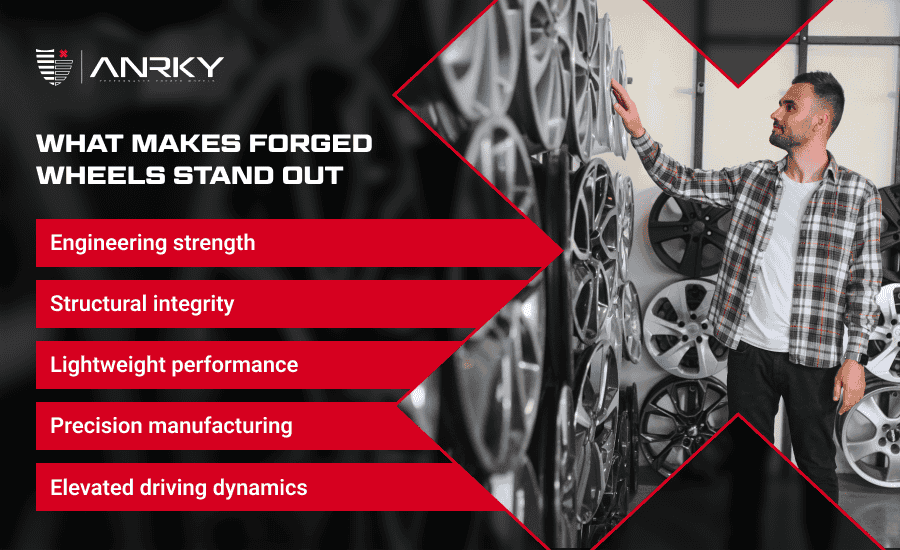
1. Engineered Strength and Structural Integrity
Through an advanced forging process, aluminum is compressed under extreme pressure, refining its internal grain structure.
This refinement enhances the material’s density and directional strength, resulting in a wheel that offers superior rigidity and greater resistance to stress-related fatigue, even under demanding driving conditions.
2. Lightweight Performance
Since forged wheels achieve greater strength at the material level, they require less mass to maintain structural integrity.
This reduction in weight translates to more immediate acceleration, sharper braking response, and a heightened sense of agility, improving the overall driving experience.
3. Precision Manufacturing
Forged wheels are precisely machined from a solid billet of aluminum and available in monoblock (one-piece), two-piece, or three-piece configurations.
Each construction style offers a unique balance of engineering precision, customization, and refined design, allowing for a more tailored approach to both performance and appearance.
4. Elevated Driving Dynamics
With less unsprung weight, forged wheels reduce the burden on suspension components and bring a more precise, responsive steering feel.
Since wheels are part of a vehicle’s unsprung mass, the components not supported by the suspension, even small reductions in weight can influence how the car maintains contact with the road.
The result is a drive that feels more precise, composed, and seamlessly connected to the road.
Considerations of Forged Wheels
While forged wheels offer impressive performance and craftsmanship, there are a few important considerations worth understanding before making your decision.
1. A Premium Commitment
Forged wheels represent a higher level of craftsmanship, and that is reflected in their price.
The combination of advanced forging, precision machining, and high-grade aluminum places them firmly in the premium category.
2. Designed for Performance
Although forged wheels are exceptionally strong, some lightweight configurations, especially those with thinner barrel profiles, can be less forgiving when exposed to harsh road hazards such as deep potholes.
3. Built to Order, But It’s Worth the Wait
Many forged wheels are produced to order, with tailored finishes and specifications to match the vehicle and owner’s vision.
This bespoke process typically requires longer production and delivery times than mass-produced cast alternatives.
How Much Do Forged Wheels Cost?
Forged wheels are a premium upgrade, and their pricing reflects the level of engineering and customization involved.
On average, you can expect to pay anywhere from $1,800 to over $3,500 per wheel, depending on the brand, design, and construction type.
Entry-level cast or flow-formed options typically start around $350 to $700 per wheel. Entry-level to mid-range forge wheels range between $6000 to $8000 per set, balancing performance, finish, and customization.
At the top end, fully custom, multi-piece forged wheels from luxury brands can exceed $10,000 per set, especially when tailored finishes, sizes, and specifications are involved.
Forged vs. Cast Wheels: A Side-by-Side Comparison
While both wheels serve the same purpose, the distinction lies in how they’re made, and how they perform.
Comparing forged and cast wheels highlights the details that set them apart.
| Feature | Forged Wheels | Cast Wheels |
| Manufacturing Process | Formed from a solid billet of aluminum using extreme heat and high-pressure forging | Made by pouring molten aluminum into a mold and allowing it to cool |
| Strength | Higher structural strength due to refined grain structure | Generally lower strength with a more porous internal structure |
| Weight | Lighter, as less material is needed to achieve strength | Heavier, often requiring more material to meet strength requirements |
| Performance Impact | Improves handling, braking, and responsiveness through reduced unsprung weight | Offers standard performance, with less noticeable gains in dynamics |
| Durability | More resistant to cracking under stress; may bend under extreme impact | More prone to cracking under heavy impact |
| Design Flexibility | Greater precision and customization, especially with multi-piece options | Limited by mold design, though still offers a range of styles |
| Cost | Premium pricing due to complex manufacturing and materials | More affordable and widely accessible |
| Production Time | Often made to order, resulting in longer lead times | Mass-produced with shorter availability times |
| Typical Use | High-performance, luxury, and track-focused vehicles | Daily drivers and budget-conscious builds |
How To Choose the Right Forged Wheels
The right set of forged wheels should complement both the performance and character of your vehicle, with careful attention to fitment, strength, and intended use.
Here’s what to consider when selecting your wheels:
1. Define Your Priorities
Start with how you want the vehicle to feel and perform.
For track-focused builds, lighter wheels can sharpen handling and responsiveness. For street-driven or show vehicles, design, finish, and presence often take the lead.
2. Confirm Vehicle Specifications
Precision begins with the right foundation. Referencing your factory specifications, through your VIN or manufacturer data, ensures proper sizing, bolt pattern, and offset for a seamless fit.
3. Check Load Ratings
Strength should never be assumed. Make sure the wheel’s load rating meets or exceeds your vehicle’s Gross Axle Weight Rating (GAWR) to maintain both performance and safety.
4. Evaluate Clearance and Fitment
Every millimeter matters. Consider brake caliper size, suspension geometry, and fender clearance to ensure a clean, uncompromised fit without unwanted contact or modifications.
5. Choose a Trusted Manufacturer
Quality becomes evident over time.
Look beyond design and focus on manufacturers that prioritize engineering integrity, those that:
- Stand behind their products with structural warranties
- Maintain strict quality control
- Can demonstrate consistent performance under demanding conditions, not just visual appeal
A brand like ANRKY reflects this level of commitment.
Each wheel is engineered, machined, finished, and assembled in the United States, allowing for tighter control over materials, tolerances, and overall quality.
By keeping production closely aligned with its design and engineering teams, ANRKY ensures a level of precision and consistency that extends beyond appearance.
Forged Wheels: FAQs
Are forged aluminum wheels better?
Forged aluminum wheels are generally considered superior due to their higher strength and lower weight.
The forging process creates a denser structure, allowing for improved handling, braking, and overall responsiveness.
That said, their advantages are most noticeable in performance-focused or high-end builds.
Do forged aluminum wheels last longer?
Forged wheels are more resistant to stress and fatigue, which can help them last longer under demanding conditions.
While durability still depends on driving habits and road conditions, they typically hold up better over time compared to cast wheels.
Are forged wheels worth the investment?
Forged wheels can absolutely be worth the investment, but it largely depends on how your vehicle is used and what you value most behind the wheel.
For those prioritizing performance, the advantages are clear.
They are typically 15–30% lighter and significantly stronger than cast alternatives, helping improve acceleration, braking, and handling through reduced unsprung weight.
Ultimately, they make the most sense for high-performance vehicles, track-focused builds, or drivers who want the best balance of strength, weight, and customization.